
General Health

  • Athletic Performance is not Affected by Controlled Carb Intake

    A 2018 study published by the Nutrients scientific journal shows that a controlled and low carbohydrate intake combined with a high fat intake has a minimal effect on athletic performance. In order to understand this study and its findings, athletes need to comprehend that this idea of controlled macronutrients is not new. The ketogenic diet is seeing a strong rise in popularity, even if it has been strongly criticized when its ideas were first published in 1920. It was believed that the diet can have a positive effect on epilepsy sufferers and today, many people associate the diet with weight loss and in some cases, with improved physical performance.

    Research methods and findings

    The study was part of a project of Australia's Centre for Sport and Research at Deakin University. It went on to investigate the blood composition of two groups of subjects. The first group followed a diet of low carbohydrates and high fats such as the keto diet while the second group followed a diet high in carbs. All subjects were elite level walkers.

    There is a clear indication that the controlled carbohydrate intake doesn't influence peak performance. It is explained by the study which measured the acid-base status in these elite athletes. But what is acid-base status? Measured in pH, acid-base status is the natural balance between acidic and basic alkaline compounds in the blood. The kidneys and the lungs are responsible for the acid-base balance.

    Controlled carb intake does not affect the athletic performance of the two groups in the study either due to pre-existing training adaptations or due to the actions of the kidneys and the lungs which directly impact acid-base. Of course, the study found that the differences in the pH levels of the two groups were significant. However, this was not enough to change the acid-base.

    The innovation of the study

    The research comes to offer new information in an area which was not studied at all. While there are other studies which seek to answer similar questions, they were not focused on elite athletes. It is why the researchers chose top athletes who performed at the Olympic Games or at World Cup championships. Even more, the researchers went to great lengths to ensure all subjects had the supervision of qualified dietitians.

    In these conditions, the main conclusion of the study is that over a period of three weeks, the low carbohydrate and high fats diet of the athletes had no influence on acid-base status. This anomaly can be associated with the fact that elite athletes have a different training status than the subjects from previous studies, which were in a healthy state, but not at an athletic. However, it can also be explained by the higher capacity of the body to neutralize dietary acids simply by expulsion either through the respiratory system or through the renal pathways. In other words, changes in athletic performance while on the ketogenic diet are not likely to come from changes in acid-base status.

    Source: Nutrients 2018, 10(2), 236; https://doi.org/10.3390/nu10020236
  • Astaxanthin Supplementation May Help Improve Strength and Endurance in the Elderly, Study Finds

    As we age, it is natural for muscle loss to occur. This process, known as sarcopenia, is estimated to occur at the rate of approximately 1% to 2% muscle loss annually after the age of 50, and is largely inevitable.

    In like fashion, strength also decreases starting around this time, at a rate of about 1.5% annually starting at age 50, and in some cases as much as 3% annually after age 60. Regardless, a study was devised to investigate if supplementation with astaxanthin could help ameliorate some degree of sarcopenic muscle loss, and help to preserve a large degree of strength.

    Owing to the fact that over $18 billion is expended annually on health care costs attributed to sarcopenic disorders, it is wise to see if supplementation with a readily available formulations can help offset such expenses.

    The Study

    First published in the Journal of Cachexia, Sarcopenia and Muscle, September 2018, the study included 42 participants whose ages ranged between 65 to 82, and sought to compare muscle size and strength between a group that received placebo, and a study group that received a combination of astaxanthin (12mg daily), tocotrienols (10mg) and zinc (6mg daily), over the course of four months.

    Subjects started supplementation with the placebo or active supplement, known as Astamed, one month before starting a 3 month active exercise training program, as the effects of the supplement were to be studied along with an exercise regimen.

    The Results

    Both groups reported improvements to overall endurance, as was observed during interval walking sessions on a treadmill set to an incline. Average distance covered over the course of six minutes also improved in both groups, but the Astamed supplement group also reported other favorable findings.

    These included an average 2% larger muscle mass volume, 14% average increase in maximal voluntary force, and 12% increase in specific force. None of these improvements were observed in the group receiving placebo.

    Possible Mechanisms

    Astaxanthin is best known as a carotenoid compound that is often supplemented to preserve the health of the eyes. It does this by virtue of its potent antioxidant and anti-inflammatory actions, which is postulated as being the same mechanism by which it is able to reduce sarcopenic muscle loss.

    In particular, the neuromuscular junction – the interface where muscles meet the nerves, are subject to oxidative damage that may lead to subsequent reduction in maximal force output. Buffering of the oxidative damage is believed to help with rejuvenation and reactivation of signals sent the muscles, in turn increasing the likelihood of muscle fiber recruitment.

    In simple terms, enhanced activation of muscle fibers equates to reduced muscle loss owing to sarcopenia.

    Conclusion

    Being the first study of its kind, the findings show the exciting potential that Astamed may have on reducing age-related mobility loss, and may also assist with preservation of functional strength in the elderly.

    More studies will need to be done to confirm these findings, but there is unlikely to be any harm from consuming such a combination now.

    References

    Sophia Z. Liu Amir S. Ali, et al. Building strength, endurance, and mobility using an astaxanthin formulation with functional training in elderly. Journal of Cachexia, Sarcopenia and Muscle September 2018 doi 10.1002/jcsm.12318

  • A Combination of Maize Starch and Glucose Improves Hydration Better than Glucose alone, Study Finds.

    The use of glucose rich rehydrating liquids is widely accepted and practiced by both recreational and professional athletes alike, but the results of a study done in Australia suggest that the addition of maize starch may be even better.

    The Study

    A group of researchers from Adelaide, Australia's Flinders University conducted a study which gave footballers a high amylose maize starch and glucose drink to investigate the effect it would have on overall hydration.

    A total of 27 Australian football players participated in the study performed over the course of four days; two control days and two days actively using the combination drink.

    All participants were club players from Adelaide football club currently undertaking preseason football training in the hot summer months, outdoors, where temperatures routinely reach 90°F.

    Control days involved athletes consuming their usual hydration drink of choice, while interventional days included athletes consuming 100 g of the high amylose maize starch in 600 mL of flavored milk the evening before, in an effort to accomplish preloading.

    On the subsequent day of training, participants then consumed a blended sports drink containing 5 g/L of glucose and 45 g/L of the resistant maize starch.

    The Results

    Athletes that consumed the combination of maize starch and glucose as part of their hydration strategies experienced not only a better hydration status post training, but also at the commencement.

    These observations were made by measuring their hematocrit volume and body weight (as acute weight loss is indicative of dehydration)

    In addition to improved hydration status before and after training, the approach was also found to be a better one at the commencement of training, superior to glucose alone [1].

    Rationale For The Study

    Even though glucose was accepted as a suitable part for the role of rehydration drink, it was less than ideal. Based on medical observations, the amount of glucose found in commercially available drinks are far higher than necessary for effective rehydration.

    It was even found that high glucose concentrations in the small intestine, at a concentration exceeding 80mmol/liter impairs water resorption, contributing to further hypo hydration.

    The new combination rehydration drink seeks to reduce the amount of glucose deemed necessary, improving overall hydration status in the process and preventing impairment of exercise performance [2]

    Limitations Of The Study

    Owing to the fact that the study was only single blinded, a fair amount of bias could have existed when recording findings. For instance, athletes knew what they were consuming and on which days, and could have compensated by increasing the amount of liquid consumed on those days, along with the rehydrating drink.

    In addition, a total of four subjects experienced abdominal discomfort after preloading with the 100 g maize drink the evening prior to training, which mandated a reduction of the dose to 50 g (as necessary). These considerations need to be kept in mind when formulating new studies.

    Conclusion

    Based on the magnitude of observed findings, it appears promising that such a combination drink may provide a superior alternative for improving hydration status in the near future.

    However, further studies are needed to confirm these findings and to take into account the new findings obtained from this study.

    Dehydration to the extent of just 2% can have a profound impact, impairing both physical and cognitive performance [3]. This study shows the exciting potential the combination of maize starch and glucose can have on performance.

    References

    1. Sinead Mary O'Connell et al. Comparison of a sports-hydration drink containing high amylose starch with usual hydration practice in Australian rules footballers during intense summer training. Journal of the International Society of Sports Nutrition 2018 doi: 10.1186/s12970-018-0253-8
    2. Barr SL. (1999) Effects of dehydration on exercise performance. Can J Appl Physiol. 1999 Apr; 24(2):164-72.
    3. Shaun K Riebl, Brenda M. Davy (2013) The Hydration Equation: Update on Water Balance and Cognitive Performance. ACSMs Health Fit J. 2013 November/December; 17(6): 21–28. doi:[10.1249/FIT.0b013e3182a9570f]
  • Dark Side of Stimulants

    THE DARK SIDE OF STIMULANTS

    -By Greg Haglund

    We are a stimulant addicted planet. In fact, two of the top three beverages consumed worldwide contain stimulants (coffee and tea) but are they helpful or harmful? Truth is they are both!!

    There are many studies supporting the health benefits of both tea and coffee. A number of these benefits come from the anti-oxidants found in both and not necessarily from the stimulants directly. So why do we continue to consume stimulants?

    • INCREASE ENERGY: It is true, stimulants (otherwise known as catecholamines) boost hormones and neurotransmitters that increase energy or reduce the perception of effort. They allow us to feel energized or mentally alert when we would otherwise be tired due to lifestyle, dietary or stress factors.
    • ENHANCED MOOD: Not only do stimulants boost norepinephrine and epinephrine (adrenaline) but they may also increase dopamine (mood enhancing neurotransmitter). This surge of dopamine helps us feel motivated, determined and happier.
    • APPETITE CONTROL: By boosting neurotransmitters you may also experience a suppression in appetite. This reduction in calories and the increase in movement from extra energy may result in body fat loss. However, is it permanent?

    It all sounds pretty good so far. We get increased energy, elevated mood and a reduced appetite that when combined may help us lose body fat. The problem is the results may not be maintainable.

    What is the underlying reason for this? Is there something in the stimulants that causes weight gain or do we simply become immune to their benefits?

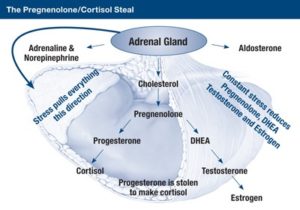
    Stimulants release adrenal hormones like nor-epinephrine and epinephrine but at the same time they release another adrenal hormone called cortisol. When we have excess cortisol, we tend to be more stressed, store more body fat and breakdown more muscle.

    The big question is how do you know if you have too much cortisol or if your cortisol rhythm is performing correctly (high in the morning and lower at night). There are many telling symptoms…

    • FATIGUE OR POOR SLEEP: One of the most obvious symptoms of cortisol dysfunction is a wired and tired effect. You often wake up tired and when you want to get to sleep you are wired or can't switch off.
    • WEIGHT GAIN: Often around the mid-section / stomach.
    • ANXIETY: Often with an increase in cortisol comes and increase in anxiety and stress then the cycle repeats by producing more cortisol in response to the anxiety and stress. You can begin to feel like a mouse on a wheel.
    • LOWERED SEX HORMONES: When cortisol and other stress hormones demand the supply of pregnenolone then less of this master hormone to available to assist with our sex hormone production. This is called 'the pregnenolone steal'. It may result in further muscle loss and body fat gain along with lowered libido and mood.

    blog

    Note: Not all these stress related symptoms are associated exclusively with stimulants but if we are not careful they may make the problems worse and not better.

    How do we get the benefits of stimulants without the side effects or negatives? Is this possible?

    Turns out there is hope!!

    Here are the top 7 steps to minimizing cortisol dysfunction and maintaining the fat burning, energy boosting and mood enhancing benefits of your stimulants.

    • IMPROVE YOUR GUT HEALTH: Your gut is responsible for close to 95% of the production of your serotonin. Serotonin is a calming neurotransmitter and is released when you do fun stuff or are happy. More serotonin means less stress and anxiety so your gut health can help break the cycle.
    • MEDITATE: Is a wonderful way to calm your mind and body so you are not over producing excitatory neurotransmitters. If you are constantly producing stress hormones your body can become less sensitive to them. It's like type II diabetes where one becomes insulin resistant from over producing insulin. You can become adrenaline resistant from over producing due to a combination of stress and stimulants.
    • CYCLE YOUR STIMULANTS: For the same reason, as above. You can become desensitized to the stimulants you use so they no longer provide the benefits in energy, focus and fat loss they once did. Having 2 days off a week or 2 on and 1 off is a great way to maintain the benefits without overwhelming your body.
    • HAVE MORE FUN: This is a sure-fire way to calm the mind and reduce the over production of cortisol. It's hard to be stressed and having fun at the same time.
    • USE ADAPTOGENS: Adaptogens are a class of compounds that help reset your sensitivity to stimulants and reduce the over production of cortisol. The most popular options are Ashwagandha, Schisandra, Rhodiola, Ginseng and Holy Basil. One Study done on Ahwagandha saw a 32% decrease in cortisol and a 52% increase in strength. Ashwagandha is used in Adrenal Switch™ (http://www.aminoz.com.au/switch-nutrition-adrenal-switch-30-serves.htmlfor this reason. Schisandra is found in Amino Switch™ which also contains a concentrated blend on Amino Acids (Protein).
    • CONSUME SUFFICIENT PROTEIN / AMINOS: Aiming for 2g/kg (target bodyweight)/day is the ideal amount of daily protein. Often this is difficult to achieve from food alone. If you are exercising regularly then cortisol may be increased to breakdown muscle tissue and provide energy. Amino Switch™ (http://www.aminoz.com.au/switch-nutrition-amino-switch-30-serves.html) as mentioned above has a concentrated Master Amino Acid Profile that provides the equivalent to 35g WPI but with only 0.2cal per serve. It is vegan friendly and gluten, soy and dairy free with added vitamins and minerals to support recovery.
    • CONSUME SUFFICIENT FATS: Fats are essential for life and a healthy body. They are certainly essential for a healthy hormonal balance since cholesterol is the starting molecule for almost all hormones. If you don't eat the right fats or you are on statins you may not have sufficient starting material to make enough sex hormones. We recommend organic coconut oil, MCT oil and olive oil as great sources of fat.

    SUMMARY:

    Stimulants can be helpful. They can assist in weight loss, hunger control, energy metabolism and focus. However, chronic use without some sort of adrenal support.

    SOLUTION:

    Instead of becoming dependant on stimulants before your workout perhaps take a break and try Ketones (Keto Switch™ (http://www.aminoz.com.au/switch-nutrition-keto-switch-20-serves.html).) which have been shown to increase focus, alertness and energy. You won't get the same kick as caffeine or other stimulants but you may feel better long term as ketones help lower inflammation and improve mitochondrial function. Ketones may also improve GABA signalling, which may lead to a better state of relaxation when you are ready to sleep.

    Adrenal Switch™ will help reduce the side effects of chronic stimulant use or abuse. It can help manage the symptoms of chronic cortisol production from physical, emotional or psychological stress. We all have stress and it is possibly the most toxic thing our body has to deal with so give it a little support.

    We have had amazing feedback regarding improved recovery and sleep using Adrenal Switch™ and Amino Switch™ together after a workout and before bed.

    Time to get the best results in the shortest amount of time.

    Disclaimer: The above article is merely a guide and is in no way a recommendation or a treatment protocol for any health conditions or diseases. You should always consult with a qualified health care provider before changing your supplement, training or nutritional strategy. Formulated Supplementary Sports Foods must not be used by pregnant or breastfeeding women, anyone consuming prescription medication or children under the age of 15 unless advised by a qualified health care provider.

1 2 3 4 5 6
GIVE $10 GET $10More info
